Radio Gone
A Million Little Pieces
Jul
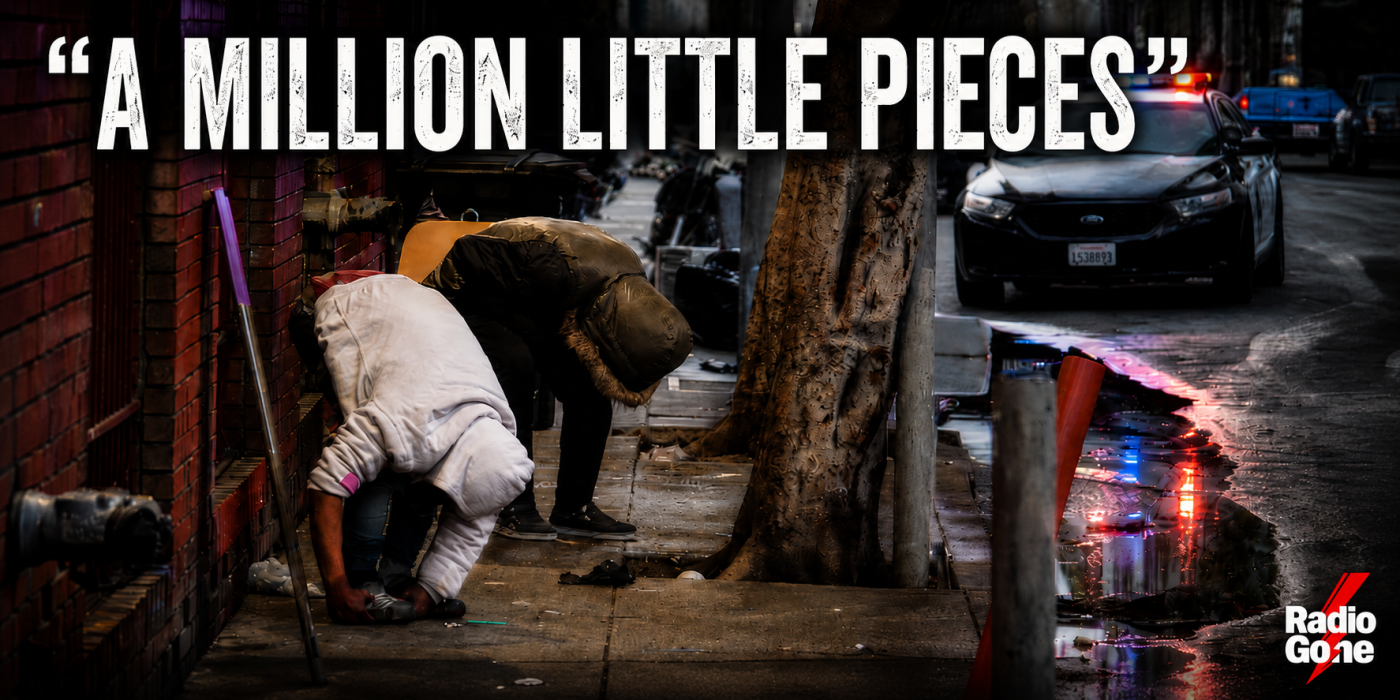
A Million Little Pieces: A Song from the Fentanyl Wreckage
Some songs don’t come dressed up. They don’t arrive clean, clever, or ready for radio. They crawl out of the basement with dirt under their nails and blood on their shirt. These lyrics feel like that. They are not trying to explain the fentanyl crisis from a safe distance. They are standing right in the middle of it, where the phone rings at 2 a.m., where mothers stop sleeping, where old friends start talking in past tense, and where another boy becomes another name nobody wants to say out loud.
This is a song about boys who were loved.
That is what makes it hurt.
Not monsters. Not strangers. Not throwaways. Boys. Sons. Kids raised with faith, joy, food on the table when there was food to give, and somebody trying like hell to keep the lights on. But the ground shifted. The money ran thin. The roof leaked. The streets got colder. The pills got stronger. And somewhere along the way, fentanyl crept in like smoke under a door.
“Ain’t no saint gonna save him” is not a clever line. It is a punch to the teeth. It is the sound of somebody who has already prayed, already begged, already made promises to God in hospital parking lots. It is what you say when you realize love is powerful, but it is not bulletproof. It is what you say when another round of advice, another family meeting, another rehab pamphlet, another tearful conversation still cannot pull someone back from the poison in their blood.
The “black blood in his veins” is not just drugs. It is the whole damn darkness. It is fentanyl, yes, but it is also shame, poverty, trauma, loneliness, bad luck, bad choices, and a system full of holes. It is every little thing that got missed, every warning sign that looked small at the time, every crack in the wall that turned into a collapse.
And that leaky roof? That may be the truest image in the song.
Because a leaky roof does not stop the rain. It only pretends to. Just like speeches do not stop overdoses. Just like blame does not revive a dead kid. Just like telling people to “make better choices” does nothing when the streets are flooded with a drug strong enough to kill them before they even understand what happened.
The song knows the ugly truth: this crisis was not built in one day. It came in pieces.
A million little pieces.
A father gone quiet. A mother working too much. A prescription after an injury. A pill passed at a party. A friend who knew a guy. A bad week. A worse month. A little shame. A little hiding. A little lying. A little more. Then the glass breaks. Then everybody stands around the wreckage asking which piece did it.
The answer is all of them.
That is the terrible honesty in these lyrics. “I could blame me, I could blame you, I could blame God and all of it’s true.” That line lives where grief really lives. Not in clean explanations. Not in easy villains. In the sick, circular thinking of everyone left behind. What did I miss? What should I have said? What if I had called? What if I had not yelled? What if I had helped sooner? What if God was listening? What if nobody was?
Fentanyl does not just kill the person using it. It blows shrapnel through everyone around them. Mothers carry it. Fathers carry it. Friends carry it. Exes carry it. Communities carry it. The dead are gone, but the living keep stepping on the glass.
The line about the scarred and broken boy is where the song stops being about one person and becomes about a generation. There are kids walking around right now already half-buried. Not because nobody loved them. Not because nobody tried. But because the storm is bigger than one family’s umbrella. The seed was planted, but the soil was bad. The wind was cruel. The rain kept coming. And sometimes, no matter how much love gets poured into the ground, nothing seems to grow.
That is the grief this song carries. Not polite grief. Not church grief. Not the kind that shakes hands and eats sandwiches after the service. This is dirty grief. Angry grief. The kind that stares at the ceiling at 3 a.m. and wants to put its fist through God’s front door.
There are no heroes here. No neat redemption arc. No saint riding in. No soft-focus ending. Just a leaky roof, black blood, shattered glass, and the brutal knowledge that another loved boy got swept away.
And maybe that is why the song matters.
Because the fentanyl crisis does not need more sugarcoating. It does not need more distance. It needs names. It needs faces. It needs someone to say the quiet part without flinching: these were our kids, our friends, our sons, our failures, our prayers, our million little pieces.
And now the rain is coming through.
LYRICS
I got friends who have a boy, raised in faith, given joy.
Ground shifted under feet, couldn’t always make ends meet
Ain’t no saint gonna save him from the black blood in his veins
Just like this leaky roof aint’ gonna save us from the rain.
A million little pieces, a million little pieces came to pass. A million little pieces, just like shattered glass.
I got an ex, she has a son, raised him right as a single mom.
Lost in the shuffle, stuck in the mud, washed away in the coming flood.
Ain’t no saint gonna save him from the black blood in his veins
Just like this leaky roof aint’ gonna save us from the rain.
I could blame me, I could blame you, I could blame god and all of its true.
A million little pieces, a million little pieces came to pass. A million little pieces, just like shattered glass.
I got a friend whose boy is scarred and broken,
Nothing changes all the words spoken.
Tell me god why this seed that’s been sown,
just blows around and never seems to grow?
Ain’t no saint gonna save him from the black blood in his veins Just like this leaky roof aint’ gonna save us from the rain.
I could blame me, I could blame you, I could blame god and all of its true.
A million little pieces, a million little pieces came to pass. A million little pieces, just like shattered glass.
